Market Briefing
Fav
Daily Pulse
Weekly Pulse
IBKR
Sentiment
Misc
Daily Market Pulse September 20, 2026
THOUGHT OF THE DAY
Late-Stage Oncology Data Threatens Established Leaders
The oncology landscape broke out today as emerging platforms produced unusually strong late-stage evidence against established standards. SMMT(Summit Therapeutics) reported Phase 3 data showing ivonescimab reduced mortality risk by 27% versus Keytruda, while MRNA(Moderna) delivered major Phase 3 melanoma data that extends mRNA technology beyond vaccines into potentially commercial oncology. These results shift the debate from pipeline promise to credible competitive displacement, placing MRK(Merck) and its Keytruda franchise under direct pressure.
Signal: Favor validated late-stage innovators, but treat incumbent oncology franchises as vulnerable where today’s data directly challenges standard-of-care efficacy.
Lululemon Guidance Collapse Signals Brand Breakdown
LULU(Lululemon Athletica) moved from broad discretionary weakness into a company-specific demand crisis today. Comparable sales fell 10%, management cut full-year revenue guidance to a 5%–7% decline and reduced EPS guidance by roughly 12%, triggering an 18% after-hours plunge; the magnitude of the reset confirms a brand and market-share problem rather than a temporary consumer slowdown.
Signal: Maintain a bearish bias toward LULU(Lululemon Athletica) until North American demand and market share stabilize; the next test is whether inventory and community strength can reverse the brand deterioration.
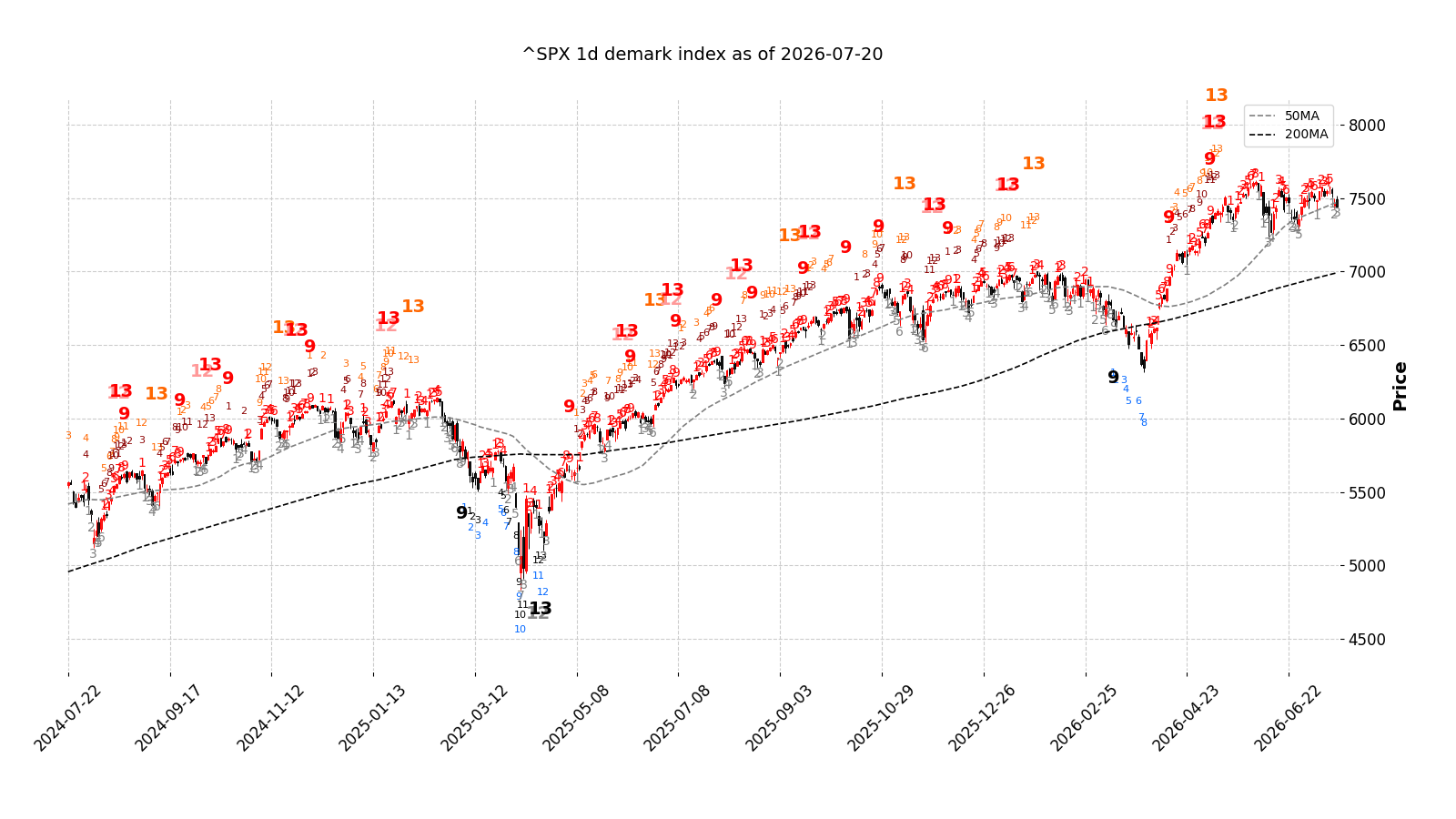
MACRO SUMMARY
Corporate news signals a two-speed consumer economy. Value retailers such as DG(Dollar General), KR(Kroger), and WMT(Walmart) continue to benefit as inflation, fuel costs, and stagnant wages push even higher-income households toward trade-down behavior. Conversely, LULU(Lululemon Athletica) reported outright revenue contraction and a sharp guidance cut, while CASY(Casey’s General Stores) missed same-store sales expectations despite strong fuel and prepared-food margins. Consumers still spend, but they are reallocating toward value and essentials while discretionary brands lose pricing power.
Cost pressure remains broad and persistent. Energy disruption has pushed crude above $100 per barrel and diesel prices to record levels, raising transportation, labor, and manufacturing costs. Companies with structural pricing power or contracted revenue—such as KO(Coca-Cola), TRGP(Targa Resources), and CEG(Constellation Energy)—remain better positioned, while retailers, airlines, restaurants, and leveraged infrastructure operators face margin compression. The rate backdrop compounds the pressure: higher Treasury yields and a hawkish Federal Reserve increase financing costs, compress high-growth valuations, and make debt-funded AI and infrastructure investment more dependent on rapid revenue conversion.
Healthcare remains a significant source of idiosyncratic dispersion rather than a uniform defensive trade. Today’s oncology data strengthens the case for innovative platforms such as SMMT(Summit Therapeutics) and MRNA(Moderna), while threatening established franchises such as MRK(Merck). The broader market is rewarding tangible clinical or earnings inflections and punishing narratives that fail to produce near-term evidence.
Forward Catalysts
- SMMT(Summit Therapeutics): Upcoming presentation of the HARMONi-2 data at the World Conference on Lung Cancer.
- NVO(Novo Nordisk): Capital Markets Day on September 21, focused on the post-semaglutide pipeline, pricing, and growth strategy.
- RHHBY(Roche): FDA decision on giredestrant expected by November 30.
- PAYX(Paychex): Upcoming earnings report, with client growth, digital adoption, pricing power, and margin guidance serving as demand indicators.
- TSLA(Tesla): September 30 deadline related to the NHTSA investigation into the Cybercab self-certification process.
ACTIONABLE IDEAS
Actionable Ideas (Positive)
- SMMT(Summit Therapeutics): Phase 3 ivonescimab data showed a 27% reduction in mortality risk versus Keytruda, with median overall survival of 30.8 months versus 22.6 months. Action: Maintain a bullish event-driven position, with the World Conference on Lung Cancer presentation as the next validation point.
- MRNA(Moderna): Major Phase 3 melanoma results provide the clearest evidence yet that its mRNA platform can generate meaningful oncology value beyond COVID vaccines. Action: Use the clinical breakout to support a bullish long-term thesis, while sizing positions below the post-data surge risk.
- KO(Coca-Cola): Six percent organic sales growth and 5% case-volume growth show resilient demand and pricing power despite consumer stress. Action: Favor KO(Coca-Cola) as a defensive compounder when rotating away from vulnerable discretionary brands.
Actionable Ideas (Negative)
- MRK(Merck): Summit’s Phase 3 results directly challenge Keytruda’s lung-cancer leadership and expose concentration risk in Merck’s oncology franchise. Action: Maintain a bearish relative view on MRK(Merck) versus emerging oncology innovators, particularly if follow-up data confirms durable prescribing advantages.
- LULU(Lululemon Athletica): A 10% comparable-sales decline, 5%–7% full-year revenue decline forecast, and roughly 12% EPS guidance cut confirm a sharp demand and brand reset. Action: Favor put spreads or relative-value shorts against stronger consumer and value-retail names; avoid treating the lower forward multiple as evidence of a completed selloff.
- PSX(Phillips 66): Record refining margins and a 110% year-to-date rally rely on geopolitical supply disruption rather than durable earnings power. Action: Reduce cyclical refining exposure or hedge long positions against margin normalization and geopolitical de-escalation.
This content is for informational purposes only and does not constitute financial, investment, or trading advice. Always consult a qualified financial professional before making any investment decisions.
Daily Market Pulse September 19, 2026
THOUGHT OF THE DAY
AI Memory Scarcity Has Become a Multi-Year Capital Cycle
Citi and UBS moved the memory narrative beyond a normal semiconductor rebound, projecting persistent HBM, DRAM, and NAND shortages through 2028–2031 as AI systems shift toward continual learning. The key change today is the breadth of the implication: memory manufacturers such as MU(Micron Technology) and SNDK(SanDisk), alongside equipment suppliers LRCX(Lam Research) and AMAT(Applied Materials), now sit at the center of the AI capital-spending chain rather than at its cyclical periphery.
Signal: Favor memory and semiconductor-equipment exposure; monitor fab expansion, HBM pricing, and evidence that supply remains sold out beyond 2026.
AI Power Procurement Is Becoming a Competitive Moat
Hyperscalers and infrastructure providers are moving from simply buying compute to securing the electricity required to operate it. Amazon’s planned nuclear investment, Meta’s 1-gigawatt Constellation agreement, Google’s grid-responsive data-center initiative, and BE(Bloom Energy)’s $25 billion Brookfield financing commitment show that power availability has become a strategic constraint on AI deployment.
Signal: Expand the AI infrastructure lens beyond chips into utilities, grid equipment, natural gas, nuclear, and distributed power; capital availability and interconnection timelines are the next bottlenecks.
Tokenized Finance Is Moving From Experiment to Institutional Infrastructure
Circle’s launch of Arc marks a clear business-model pivot from stablecoin issuance toward an integrated financial settlement network backed by BlackRock, DTCC, Mastercard, Visa, and more than 100 ecosystem partners. The parallel S&P Global–OpenZeppelin transaction and Nasdaq’s work on real-time sanctions screening show that major financial institutions are building the compliance and security layer needed for tokenized assets to enter regulated markets.
Signal: Track adoption and transaction volume rather than launch headlines; sustained institutional usage would support CRCL(Circle Internet Group), NDAQ(Nasdaq), and SPGI(S&P Global), while weak utilization would expose a valuation built on infrastructure optionality.
MACRO SUMMARY
Corporate news points to a high-investment, supply-constrained economy, not a broad-based demand boom. AI-related demand remains exceptionally strong: memory suppliers report capacity booked well into future years, hyperscalers are committing hundreds of billions to data centers, and networking, optical, cybersecurity, and semiconductor-equipment companies continue to see strategic demand. The constraint has shifted from finding customers to securing chips, power, cooling, and financing.
Outside AI, the picture is more uneven. Elevated fuel prices are forcing airlines to cut capacity and prioritize premium traffic, while high mortgage rates are weakening housing activity and pressuring homebuilders and digital real-estate platforms. Banks and fintechs continue to benefit from deposits, interest income, and trading activity, but rising charge-offs, auto-lease losses, expensive third-party funding, and leverage expose the economy’s credit-sensitive areas. Companies also continue to cite tariffs, labor costs, and input inflation, reinforcing a higher-for-longer rate risk even as defensive consumer and infrastructure businesses retain pricing power.
Forward Catalysts
- Intuit Investor Day: Management is expected to detail AI integration, ecosystem expansion, and higher-margin vertical initiatives.
- FICO Score 10T launch in January 2027: Adoption by FHA-approved lenders will test FICO’s next-generation mortgage scoring strategy.
- IonQ’s next earnings report: Investors will look for commercial revenue and customer contracts tied to AI-driven quantum circuit synthesis.
- September 2026 Morgan Stanley conference: Ascendis is expected to provide updates on its TransCon Semaglutide strategy after reclaiming rights from Novo Nordisk.
- December 2026 CME Securities Clearing rollout: The launch could materially expand CME’s role in post-trade infrastructure.
- 2027 regulatory and execution milestones: These include the FICO launch, the potential completion of UPST(Upstart Holdings)’s bank charter, and the continued conversion of NOK(Nokia)’s €2.8 billion AI order book into revenue.
ACTIONABLE IDEAS
Actionable Ideas (Positive)
- Memory and semiconductor equipment basket — MU(Micron Technology), SNDK(SanDisk), LRCX(Lam Research), AMAT(Applied Materials): Citi and UBS now forecast multi-year shortages across HBM, DRAM, and NAND, while suppliers report strong forward bookings. Action: Build exposure to the memory-capacity cycle, prioritizing companies with pricing power and direct participation in fab expansion.
- AMZN(Amazon): AWS growth, $220 billion of planned 2026 capital expenditure, and investment in nuclear power show that Amazon is securing both compute and electricity for AI. Action: Favor AMZN as a large-cap infrastructure beneficiary, while monitoring capex intensity and logistics execution.
- CRCL(Circle Internet Group): Arc gives Circle a path toward recurring infrastructure revenue and has attracted major traditional-finance validators. Action: Treat CRCL as a high-beta digital-finance infrastructure position; require evidence of transaction growth before adding aggressively.
- EQIX(Equinix): Interconnection revenue is growing as AI workloads demand low-latency, high-density connectivity, while diversified customers and strong development yields support the business. Action: Use EQIX for steadier exposure to AI data-center infrastructure than speculative compute providers.
- MSI(Motorola Solutions): The Louisiana public-safety contract and Silvus acquisition reinforce a shift toward sticky software, communications, and defense ecosystems. Action: Favor MSI on pullbacks as a recurring-revenue defense-technology compounder.
Actionable Ideas (Negative)
- AAL(American Airlines) and LUV(Southwest Airlines): Jet fuel prices are up roughly 80% year over year, forcing capacity reductions and exposing the airlines’ low-margin operating models. Action: Avoid unhedged airline exposure and favor a bearish stance until fuel costs normalize or pricing power clearly offsets the shock.
- LEN(Lennar) and OPEN(Opendoor Technologies): Mortgage rates near 7% are weakening housing demand, increasing incentives, and pressuring transaction volumes. Action: Maintain a defensive stance on rate-sensitive housing equities; falling affordability remains a direct earnings risk.
- CHTR(Charter Communications): More than 700,000 broadband subscribers have left in just over a year as fiber, mobile broadband, and Starlink intensify competition. Action: Avoid treating CHTR as a bond-like income play; structural subscriber losses threaten the cash-flow thesis.
- UPS(United Parcel Service): Quarterly operating cash flow fell below the dividend payout while operating income declined 49% and volume fell 3.6%. Action: Avoid yield-driven buying; a thin dividend coverage buffer leaves UPS vulnerable to a payout cut if the turnaround misses.
- MRNA(Moderna): The stock trades far above consensus fair value while the investment case depends heavily on unproven Phase 3 success for intismeran. Action: Avoid chasing the rally; use elevated valuation and binary clinical risk as grounds for a bearish or hedged position.
This content is for informational purposes only and does not constitute financial, investment, or trading advice. Always consult a qualified financial professional before making any investment decisions.
Daily Market Pulse September 18, 2026
THOUGHT OF THE DAY
AI Infrastructure Is Becoming an Energy and Power-Availability Trade
Today’s news moves the AI buildout beyond chips and cloud software into contracted electricity, backup generation, cooling, and grid capacity. GNRC(Generac Holdings) secured a potential $8 billion Amazon-linked supply agreement, while DTE(DTE Energy) and CAT(Caterpillar) highlighted multi-gigawatt data-center demand and record power backlogs. This marks a clear escalation: hyperscaler AI spending is now creating visible, long-duration demand for physical power infrastructure.
Signal: Favor companies with contracted exposure to data-center power demand, but distinguish secured backlog from speculative capacity plans.
Fuel Inflation Has Broken Through Into Corporate Guidance
The oil shock moved from commodity markets into earnings expectations today. JBHT(J.B. Hunt Transport Services) issued an intra-quarter warning for a 5%–10% sequential earnings decline as diesel costs outran surcharge recovery, while AAL(American Airlines) confirmed fourth-quarter capacity cuts after projecting $1 billion of incremental fuel expense. The change is material: companies are shifting from growth and volume preservation toward route cuts, capacity discipline, and margin defense.
Signal: Underweight transport operators with weak fuel pass-through; favor asset-light or fee-based models with contractual recovery mechanisms.
Tokenized Equities Became a Regulatory, Not Just a Crypto, Theme
The SEC’s five-year innovation exemption for tokenized U.S. equities represents a new regulatory opening for 24/7 trading, blockchain settlement, and on-chain shareholder rights. COIN(Coinbase Global), ICE(Intercontinental Exchange), and HOOD(Robinhood Markets) now face a credible opportunity to build equity-market infrastructure, while CRCL(Circle Internet Group) and Ripple are competing to provide settlement rails for machine payments. Today’s development shifts blockchain’s investable thesis from speculative tokens toward regulated market plumbing.
Signal: Watch implementation, issuer participation, and settlement economics; the first compliant platform to generate recurring institutional volume will capture the strongest re-rating.
MACRO SUMMARY
Today’s corporate news points to a more inflationary and selective economy. Energy prices are now directly compressing transport and airline margins, with JBHT(J.B. Hunt Transport Services), AAL(American Airlines), and LUV(Southwest Airlines) adjusting capacity or warning on profitability. Companies cannot pass through higher fuel costs immediately, especially where contracts, advance bookings, or competitive pricing constrain revenue. That dynamic raises the risk of second-order inflation through freight, airfare, and consumer goods while weakening discretionary demand.
At the same time, AI investment remains the economy’s clearest source of incremental demand. Hyperscaler commitments are supporting semiconductors, networking, power generation, utilities, and specialized infrastructure, but the capital cycle is becoming more expensive. The 10-year Treasury yield near 5% raises financing costs and compresses long-duration equity multiples, while highly leveraged AI infrastructure providers such as CRWV(CoreWeave) and ORCL(Oracle) must convert large backlogs into cash flow before credit risk becomes the dominant narrative. The market is therefore separating AI beneficiaries with contracted demand and strong balance sheets from companies funding growth through expensive debt or equity issuance.
Policy is also becoming a larger market driver. The SEC’s tokenized-equity framework creates a new financial-infrastructure opportunity, while continued hawkish Federal Reserve guidance keeps pressure on valuation, housing, and credit-sensitive sectors. Corporate news increasingly supports a barbell market: cash-generative defensives and contracted infrastructure on one side, speculative long-duration growth on the other.
Forward Catalysts
- September 22: BUD(Anheuser-Busch) Capital Markets Day; ONON(On Holding) Investor Day; AZO(AutoZone) earnings.
- September 23: CTAS(Cintas), PAYX(Paychex), and MCD(McDonald’s) earnings or investor events.
- September 24: COST(Costco), DRI(Darden Restaurants), PODD(Insulet), and SHW(Sherwin-Williams) events; the PSKY(Paramount Skydance) and WBD(Warner Bros. Discovery) bond hearing.
- September 30: HPE(Hewlett Packard Enterprise) Networking Investor Day and JBL(Jabil) earnings.
- October 1: ACN(Accenture) earnings, with bookings and guidance critical to the AI-consulting thesis.
- October 9: DAL(Delta Air Lines) earnings, with fuel, premium demand, and margin trends in focus.
- October 16: TFC(Truist Financial) earnings, testing the bank’s shift away from consumer lending.
- October 20: KR(Kroger) Investor Day, a key test of its margin-recovery and omnichannel strategy.
ACTIONABLE IDEAS
Actionable Ideas (Positive)
-
GNRC(Generac Holdings): Amazon’s potential $8 billion supply agreement, including equity-linked warrants, moves Generac from backup-power supplier toward a contracted AI-infrastructure beneficiary. Action: Build a bullish position on pullbacks, with execution of 2027–2028 deliveries as the key validation point.
-
ADI(Analog Devices): Q3 revenue rose 40%, industrial revenue increased 53%, gross margin reached 72.5%, and Q4 guidance implies a 52% operating margin. Action: Buy weakness; the earnings and margin acceleration support a semiconductor re-rating despite limited recent share-price momentum.
-
DTE(DTE Energy): The utility has secured 2.4 GW of data-center capacity, including projects for Oracle and Google, with up to $5 billion of incremental investment through 2032. Action: Use DTE as a lower-beta way to express the AI power-demand theme, while monitoring regulatory approval and equity-funding needs.
-
COIN(Coinbase Global): The SEC’s tokenized-equity exemption creates a potential new revenue stream beyond spot crypto trading. Action: Treat COIN as a high-beta regulatory catalyst trade, sized below core equity positions because its 80x-plus forward P/E demands rapid execution and sustained adoption.
Actionable Ideas (Negative)
-
JBHT(J.B. Hunt Transport Services): The intra-quarter warning for a 5%–10% sequential earnings decline shows that diesel inflation is overwhelming the company’s surcharge mechanism. Action: Maintain a bearish view or use rallies to reduce exposure; the key risk is broader freight-sector estimate cuts.
-
AAL(American Airlines) and LUV(Southwest Airlines): Both airlines are cutting or restraining capacity as jet-fuel costs surge, while advance bookings limit immediate fare pass-through. Action: Underweight airlines with weak fuel protection and favor carriers with stronger premium demand and pricing power.
-
ORCL(Oracle): Cloud and AI backlog growth remains strong, but $5.4 billion of negative quarterly free cash flow, rising debt, and an S&P downgrade to BBB- expose the cost of its expansion. Action: Avoid chasing the AI rally; consider downside protection until backlog conversion produces sustained free cash flow.
-
CRWV(CoreWeave): The $6.3 billion equity raise, $35.6 billion debt load, and rapidly rising interest expense show that AI demand does not eliminate financing risk. Action: Avoid equity exposure until the company demonstrates cash-flow conversion; the backlog alone does not offset dilution and leverage.
This content is for informational purposes only and does not constitute financial, investment, or trading advice. Always consult a qualified financial professional before making any investment decisions.
Daily Market Pulse September 17, 2026
THOUGHT OF THE DAY
The Fed has shifted the market back to a higher-for-longer regime. The 25-basis-point hike to 3.75%–4.00%, Kevin Warsh’s explicitly hawkish inflation stance, and 16 of 18 officials projecting another increase have reset the policy path. The 10-year Treasury yield near 5% now sets the valuation hurdle for equities, especially leveraged companies and long-duration growth stocks.
Signal: Favor cash-generative, low-leverage businesses; reduce exposure to rate-sensitive multiples and refinancing-dependent balance sheets.
AI infrastructure is beginning to monetize scarcity. Nebius raised prices by as much as 25% for AMD CPU services and 21% for NVIDIA B300 capacity, while Amazon committed $2.4 billion to Generac for data-center backup power and expanded its supply-chain control through Corning. The breakout today is the migration from AI demand as a growth narrative to pricing power, power procurement, memory scarcity, and contracted infrastructure revenue.
Signal: Prefer the suppliers that control bottlenecks—power, memory, networking, cooling, and custom silicon—over capital-intensive neocloud operators that must finance the buildout.
Consumer and housing data now show a sharper bifurcation. BJ’s delivered the strongest large-format retail growth in the group, while Albertsons cut EBITDA guidance, Campbell’s reported a 7.9% revenue decline, and Lennar cut deliveries as orders, pricing, margins, and cash reserves deteriorated. The breakout is not a uniform consumer slowdown; it is a clear rotation toward value and essential spending, alongside acute stress in rate-sensitive housing.
Signal: Favor membership/value retailers with traffic momentum; stay defensive on homebuilders, discretionary brands, and businesses facing promotional or financing pressure.
MACRO SUMMARY
Today’s corporate news confirms that financial conditions are tightening even where nominal demand remains resilient. The Fed is responding to sticky inflation, elevated oil prices, and durable labor demand with a renewed hiking cycle. Companies with large capital programs or refinancing needs now face a higher cost of capital, while insurers and cash-rich technology companies benefit from stronger investment income or the ability to fund expansion internally.
The AI cycle remains powerful, but its economic effects are becoming more uneven. Hyperscalers continue to commit massive capital, yet the constraint has shifted toward electricity, high-bandwidth memory, optical connectivity, and cooling capacity. Suppliers such as MU(Micron Technology), AVGO(Broadcom), APH(Amphenol), and GNRC(Generac) are gaining pricing leverage, while operators such as CoreWeave and IREN must prove that contracted demand can overcome debt service, dilution, and execution costs.
The consumer data reinforces a two-speed economy. Value-oriented membership retail continues to capture share, but grocery margins and legacy packaged-food demand remain under pressure. Housing shows the clearest macro damage: mortgage rates near 7%, weaker orders, falling average selling prices, rising incentives, and shrinking builder cash reserves point to affordability-driven demand destruction rather than a temporary inventory adjustment.
Forward Catalysts
- MCD(McDonald’s) Investor Day on September 23, 2026; management must address U.S. traffic, margins, franchisee relations, and the global expansion plan.
- NKE(Nike) fiscal Q4 earnings on October 1, 2026; investors will assess inventory, digital sales, China demand, and margin recovery.
- JNJ(Johnson & Johnson) earnings on October 13, 2026.
- Paramount/California and Writers Guild settlement talks on October 14–15, 2026, with direct implications for PSKY(Paramount Skydance) and WBD(Warner Bros. Discovery).
- ALLY(Ally Financial) Q3 earnings on October 20, 2026.
- NOC(Northrop Grumman) Q3 earnings on October 20, 2026.
- PKG(Packaging Corporation of America) Q3 earnings on October 21, 2026, followed by its conference call on October 22.
- The upcoming Bank of Japan policy decision, which could accelerate the yen rally and pressure global carry trades.
- NBIS(Nebius Group) Q3 earnings in mid-November, with investors focused on capacity delivery, pricing retention, and capital spending.
ACTIONABLE IDEAS
Actionable Ideas (Positive)
- MU(Micron Technology): AI-driven HBM and DRAM shortages have pushed memory pricing sharply higher, while Micron is expanding capacity in India and holds significant customer commitments. Action: Build exposure to the memory cycle, but monitor Taiwan labor negotiations and the timing of new supply.
- AVGO(Broadcom): AI revenue guidance is up 236% year over year, with multiyear hyperscaler contracts and $179.2 billion in remaining performance obligations. Action: Use weakness to accumulate a high-margin custom-silicon and networking leader rather than chase lower-quality AI infrastructure operators.
- TRV(Travelers): Rising yields are strengthening net investment income while earnings estimates have risen 13.7% over 60 days. Action: Favor TRV as a rate-supported defensive compounder, provided catastrophe losses remain controlled.
- BJ(BJ’s Wholesale Club): Q2 revenue rose 15.7% and exceeded expectations while larger peers struggled. Action: Prefer BJ’s over weaker grocery and general-merchandise operators as consumers trade down toward membership value.
- PWR(Quanta Services): A 46.9% expected Q3 earnings increase, repeated earnings beats, and exposure to data-center power and grid modernization support a durable infrastructure thesis. Action: Use pullbacks to gain exposure to the physical buildout behind AI demand.
Actionable Ideas (Negative)
- FLNC(Fluence Energy): Management cut FY2026 revenue guidance to $2.4 billion and now expects an adjusted EBITDA loss of approximately $200 million. Action: Maintain a bearish position; the guidance cut exposes execution failure and makes the extreme valuation difficult to defend.
- LEN(Lennar): Orders declined 9%, gross margin fell to 15.8%, cash reserves dropped sharply, and full-year delivery guidance was cut. Action: Short or underweight homebuilders until mortgage rates and order trends improve; Lennar’s guidance cut confirms housing demand destruction.
- AAL(American Airlines Group): The projected $1 billion Q4 fuel-cost increase arrives alongside heavy leverage and possible capacity cuts. Action: Avoid the equity or use puts; the fuel shock directly threatens margins, liquidity, and debt service.
- ORCL(Oracle): AI-cloud demand is strong, but negative free cash flow, heavy debt issuance, a BBB- credit rating, and a 192-basis-point CDS spread show that growth is becoming balance-sheet intensive. Action: Avoid chasing the equity at current expectations; favor cash-rich AI infrastructure leaders.
- WMT(Walmart): The Q2 EPS guidance miss contrasts with a 38.6x P/E and rising regulatory scrutiny over marketplace product claims. Action: Underweight on valuation; the stock requires sustained growth and successful digital monetization to justify its premium.
This content is for informational purposes only and does not constitute financial, investment, or trading advice. Always consult a qualified financial professional before making any investment decisions.
Daily Market Pulse September 16, 2026
THOUGHT OF THE DAY
Fed Reignites the Higher-for-Longer Rate Shock
The Fed moved from inflation management to outright policy escalation, delivering its first rate hike in more than three years and projecting inflation above target until 2029. The 10-year Treasury yield’s break above 5% confirms that the shock now extends beyond front-end policy rates into long-duration assets, regional banks, housing, currencies, and high-multiple growth equities.
Signal: Stay underweight long duration through TLT.US(iShares 20+ Year Treasury Bond ETF) and favor balance-sheet strength; monitor further pressure on KRE(SPDR S&P Regional Banking ETF), EURUSD, and AUDUSD.
AI Power Access Becomes Critical Infrastructure Bottleneck
Today’s news shifts the AI infrastructure trade from compute availability to electricity availability. ERCOT’s conditional approval of 3.2 GW for CIFR(Cipher Digital) and Amazon’s $8 billion power-infrastructure commitment with GNRC(Generac) show that grid access, onsite generation, and thermal reliability now determine how quickly data-center capacity can scale.
Signal: Favor power, cooling, grid, and energy-infrastructure suppliers over undifferentiated AI exposure; watch whether conditional power allocations convert into binding contracts and deployed megawatts.
Transport and Industrial Guidance Warnings Spread
The weak-guidance pattern broadened into a cross-sector earnings event today: JBHT(J.B. Hunt Transport Services) issued an intra-quarter warning as fuel and driver costs overwhelmed pricing flexibility, while UAL(United Airlines), FLNC(Fluence Energy), LII(Lennox International), DECK(Deckers Outdoor), and TSCO(Tractor Supply) exposed weakening margins, demand, or execution. This marks a clear escalation from isolated misses to withdrawn frameworks, outright guidance cuts, and operational retrenchment.
Signal: Reduce exposure to businesses with fixed costs, weak pass-through, or high labor and fuel sensitivity; prioritize margin visibility over headline revenue growth.
MACRO SUMMARY
Today’s corporate news describes a stagflationary pressure point. The Fed’s hike and long inflation horizon are lifting financing costs just as companies report higher fuel, labor, production, and logistics expenses. Consumer-facing businesses are seeing weaker traffic and value sensitivity, while homebuilders and rate-sensitive retailers face deteriorating affordability. The combination raises the risk that demand slows before input costs normalize.
Credit conditions are also tightening. Banks lifted prime rates to 7%, regional lenders sold off, and higher Treasury yields are pressuring loan growth, commercial real estate, and leveraged balance sheets. Companies with strong cash generation and pricing power can absorb the shock; companies dependent on refinancing, aggressive capex, or delayed price pass-through face direct margin compression.
At the same time, AI investment remains exceptionally strong but increasingly constrained by physical infrastructure. Amazon’s Generac agreement, Cipher’s ERCOT allocation, and ongoing demand for data-center power show that electricity and grid access—not chips alone—now limit deployment. This creates a sharp macro split: conventional transport, housing, and discretionary demand are weakening under higher rates, while power, networking, cooling, and data-center infrastructure continue to attract capital.
Forward Catalysts
- September 23: McDonald’s Investor Day, where management must provide targets for traffic recovery, franchisee alignment, and beverage expansion.
- September 23: Meta’s Connect event, which will test whether heavy AI spending is translating into monetizable products and user engagement.
- September 23: Cintas’ earnings release, with investors focused on demand, margins, and the regulatory outlook for its UniFirst acquisition.
- September 23: Avery Dennison’s High-Value Category Investor Showcase, including updates on RFID, digital identification, and sustainable labeling.
- October 1: Accenture’s earnings release, offering a read on enterprise AI demand, federal contracting, and consulting margins.
- October 15–16: Prologis and Regions Financial earnings, providing signals on logistics real estate, loan growth, and credit quality.
ACTIONABLE IDEAS
Actionable Ideas (Positive)
- GNRC(Generac): Amazon committed $8 billion to Generac power infrastructure and took an equity-linked position. Action: Buy on weakness as a direct beneficiary of the shift toward backup generation and reliable power for AI data centers; monitor execution of the 2027–2028 delivery schedule.
- CIFR(Cipher Digital): ERCOT conditionally approved up to 3.2 GW of base-load capacity for Cipher’s Texas sites. Action: Maintain a tactical long bias, but size for volatility because the approval remains conditional and the stock is technically overbought.
- VRT(Vertiv): The company secured a contingent $2.6 billion agreement tied to data-center power and thermal-management infrastructure. Action: Favor VRT as a higher-quality way to express the AI power bottleneck, with milestone conversion the key confirmation point.
- MSFT(Microsoft): Microsoft combines strong positive free cash flow, low leverage, and direct exposure to AI demand, unlike more debt-dependent hyperscalers. Action: Use MSFT as a core AI allocation when higher yields punish speculative, cash-burning infrastructure names.
Actionable Ideas (Negative)
- TLT.US(iShares 20+ Year Treasury Bond ETF): The 10-year yield broke above 5% after the Fed extended the inflation horizon to 2029. Action: Stay short or underweight long-duration Treasuries until yields stabilize or the Fed signals a credible pivot.
- JBHT(J.B. Hunt Transport Services): The company warned of a 5%–10% sequential earnings decline as fuel costs rose and driver expenses increased by $25 million. Action: Sell rallies or use put spreads; the company lacks sufficient near-term pricing flexibility to protect margins.
- FLNC(Fluence Energy): FY2026 revenue guidance fell from $2.9–$3.1 billion to $2.4 billion, while adjusted EBITDA shifted to an expected $200 million loss. Action: Avoid or short into strength; the guidance cut shows that backlog demand cannot offset manufacturing bottlenecks.
- TSCO(Tractor Supply): Management withdrew its multi-year earnings framework amid weak comparable-store sales and a 42.7% one-year stock decline. Action: Avoid the turnaround narrative until comparable sales and forward guidance stabilize.
- LII(Lennox International): A full-year EPS guidance miss drove a 33.2% share-price collapse. Action: Remain underweight; elevated input costs and weakening demand have damaged management credibility despite long-term cash-flow potential.
This content is for informational purposes only and does not constitute financial, investment, or trading advice. Always consult a qualified financial professional before making any investment decisions.
Daily Market Pulse September 15, 2026
THOUGHT OF THE DAY
Senate Clarity Act Failure Hits Crypto
The Senate’s failure to advance the Clarity Act abruptly removed the crypto sector’s most important near-term regulatory catalyst. The rejection triggered a broad selloff: COIN(Coinbase) fell roughly 10%, while CLSK(CleanSpark), RIOT(Riot Platforms), HUT(Hut 8), CORZ(Core Scientific), CRCL(Circle Internet Group), and MSTR(Strategy) also declined. The move shifts the market from pricing eventual federal clarity to pricing prolonged policy paralysis, with stablecoin oversight, tokenized assets, and institutional adoption now facing a longer timeline.
Signal: Reduce exposure to regulatory-beta crypto equities and wait for a credible legislative restart; miners and leveraged Bitcoin proxies remain the most vulnerable.
MACRO SUMMARY
Today’s corporate news points to a higher-for-longer financial environment. The Senate’s crypto setback shows that policy risk can overwhelm company-specific execution, while rising Treasury yields, elevated oil prices, and expectations for further Federal Reserve tightening continue to pressure long-duration assets. Housing, restaurants, discretionary retail, and rate-sensitive REITs are already showing the consequences through weaker traffic, margin pressure, or falling valuations.
The broader economy remains uneven rather than uniformly weak. AI infrastructure, defense, healthcare, logistics, and essential services continue to attract demand and support backlogs, but companies face rising financing costs, labor expenses, energy prices, and supply-chain friction. Credit stress is also becoming more visible: consumer delinquencies are rising, leveraged companies are refinancing at higher costs, and several businesses are relying on debt or equity issuance to fund expansion. The combination of resilient strategic demand and tighter financial conditions favors cash-generative companies with pricing power over speculative growth stories.
Forward Catalysts
- Federal Reserve rate decision and forward guidance: Markets are pricing a 25-basis-point hike, with the policy statement and Chair Warsh’s tone likely to determine the next move in the dollar, Treasury yields, crypto, and other risk assets.
- Future U.S. crypto legislation: Any renewed negotiations or revised version of the Clarity Act will be the key catalyst for BTC-USD(Bitcoin), COIN(Coinbase), stablecoin issuers, and crypto miners.
ACTIONABLE IDEAS
Actionable Ideas (Positive)
- VLO(Valero Energy): Refining margins remain supported by geopolitical supply disruption, constrained global capacity, and low fuel inventories. The actionable angle is to favor refiners with complex assets and access to low-cost feedstock while the current margin cycle persists.
- PWR(Quanta Services): A $53.4 billion backlog, 41.1% Q2 revenue growth, and $886 million of free cash flow provide unusually strong visibility into grid modernization and data-center power demand. The actionable angle is to use pullbacks to build exposure to power infrastructure, while monitoring the premium valuation.
Actionable Ideas (Negative)
- COIN(Coinbase): The Senate’s failure to advance the Clarity Act removed a major regulatory catalyst and drove an approximately 10% decline. The actionable angle is to stay short or underweight until legislation regains momentum; regulatory uncertainty directly raises legal, competitive, and valuation risk.
- CRCL(Circle Internet Group): Circle suffered the steepest crypto-equity decline, falling more than 10%, while ARK Invest sold approximately $13.8 million of shares. The actionable angle is to avoid chasing rebounds until stablecoin legislation advances and institutional outflows stabilize.
- CLSK(CleanSpark), RIOT(Riot Platforms), and HUT(Hut 8): Bitcoin miners sold off as policy uncertainty compounded macro pressure from higher yields and weaker crypto sentiment. The actionable angle is to underweight the group because operating leverage to Bitcoin and financing conditions magnifies downside when regulatory support disappears.
- MSTR(Strategy): The failed Clarity Act removed a key adoption catalyst for the company’s leveraged Bitcoin strategy. The actionable angle is to avoid or short the highest-beta crypto proxy while BTC-USD(Bitcoin) trades under renewed policy and rate pressure.
This content is for informational purposes only and does not constitute financial, investment, or trading advice. Always consult a qualified financial professional before making any investment decisions.
Daily Market Pulse September 14, 2026
THOUGHT OF THE DAY
AI Hardware Rally Reverses on Capex Fears
Today’s move marks a clear break from the recent AI infrastructure consensus: warnings from Anthropic and OpenAI leadership about slowing frontier-model development triggered a broad selloff across chips, networking, optical components, memory, and data-center equipment. Strong operating results no longer protected hardware names—AMAT(Applied Materials), AMD(Advanced Micro Devices), ASML(ASML), ANET(Arista Networks), MRVL(Marvell Technology), and SMCI(Super Micro Computer) all sold off as investors questioned whether hyperscaler capex can support current valuations. Capital rotated toward software and cybersecurity, where CRWD(CrowdStrike), PANW(Palo Alto Networks), NOW(ServiceNow), and OKTA(Okta) offer more direct exposure to AI adoption without the same hardware-spending dependency.
Signal: Reduce unhedged exposure to high-multiple AI infrastructure and favor profitable software, cybersecurity, and data-center assets positioned for inference rather than frontier-model training.
High Rates Trigger Homebuilder Guidance Cuts
Today’s homebuilder reports converted higher-for-longer rates from a macro concern into an earnings reset. DHI(D.R. Horton) delivered flat revenue and cut full-year guidance, while LEN(Lennar) reduced its annual volume outlook and increased incentives to preserve demand; NVR(NVR) reported a 10.5% revenue decline and missed estimates, confirming that scale and premium positioning no longer offset mortgage-rate pressure. PHM(PulteGroup) beat expectations, but its 9.6% revenue decline and post-earnings selloff showed that even better operators face a weakening demand and margin backdrop.
Signal: Stay defensive across homebuilders and building products; the key upside catalyst is a genuine rate-cut cycle, while continued mortgage-rate pressure points to further volume and margin revisions.
MACRO SUMMARY
Today’s corporate news signals a higher-for-longer, risk-off macro regime. Energy prices above $100 per barrel are raising airline and logistics costs, while Treasury yields near 5% and expectations for another Fed hike are increasing discount rates across long-duration assets. The AI selloff shows that markets now demand cash-flow evidence from capital-intensive growth stories: investors punished AMAT(Applied Materials), AMD(Advanced Micro Devices), and ANET(Arista Networks) despite strong reported demand because the market questioned the durability and financing of future capex.
Demand is weakening most visibly where financing costs matter. Homebuilders cut guidance as mortgage rates reduced affordability, and NVR(NVR) and DHI(D.R. Horton) showed that lower volumes are beginning to pressure margins. Credit conditions also warrant attention: heavily leveraged AI infrastructure operators such as CRWV(CoreWeave) face greater refinancing risk if training demand slows, while rising SME delinquencies and restructuring activity point to broader stress among smaller businesses. The picture is not uniformly recessionary—freight shipments finally turned positive after a prolonged contraction, and cybersecurity and enterprise software demand remain firm—but capital-intensive sectors are losing the benefit of the doubt.
Forward Catalysts
- Federal Reserve rate decision: Markets are pricing a potential 25-basis-point hike; the statement and rate path will drive homebuilder, REIT, long-duration technology, and bond-market positioning.
- September 23, 2026: CTAS(Cintas) earnings, with a positive earnings ESP and elevated expectations.
- September 24, 2026: COST(Costco) Q4 earnings; the stock has sold off after each of its last four reports despite solid operating results.
- September 23, 2026: MCD(McDonald’s) Investor Day, with investors focused on margin resilience, digital delivery, and shareholder returns.
- Upcoming Q3 FY27 earnings: CRWD(CrowdStrike) must convert the AI-security rally into bookings and revenue growth; management’s $1.52 billion revenue guide sets a high bar.
ACTIONABLE IDEAS
Actionable Ideas (Positive)
- Cybersecurity rotation — Buy/overweight CRWD and FTNT. CRWD(CrowdStrike) rallied sharply as AI-safety concerns increased demand for AI-native defense, while FTNT(Fortinet) combines more than 100% SASE Firewall growth with a lower forward sales multiple than PANW(Palo Alto Networks). The actionable angle is to own profitable security leaders benefiting from AI adoption without direct reliance on hyperscaler hardware capex; monitor upcoming bookings and margin delivery closely.
- Enterprise AI workflow adoption — Favor NOW. NOW(ServiceNow) reported $1 billion in AI annual contract value, a ninefold increase in agentic deployments, and 24.5% subscription growth. The stock’s relative strength reflects a shift toward embedded, recurring software applications; maintain exposure while requiring continued contract expansion to justify the premium.
- Cruise operators with fuel protection — Prefer RCL over unhedged peers. RCL(Royal Caribbean Group) has hedged roughly 60% of fuel needs and already sold two-thirds of 2026 capacity at record prices, while CCL(Carnival) remains exposed to fuel spikes. The actionable angle is a relative-value position favoring RCL against unhedged cruise and airline operators.
Actionable Ideas (Negative)
- Short or underweight leveraged AI infrastructure — CRWV. CRWV(CoreWeave) combines 74% rural contracted power exposure, $27 billion of debt, and expensive financing with dependence on training-heavy AI demand. The actionable angle is to avoid new exposure or use downside structures; a slowdown in training could leave capacity underutilized while debt service remains fixed.
- Underweight semiconductor equipment and networking — AMAT and ANET. AMAT(Applied Materials) and ANET(Arista Networks) sold off despite strong fundamentals because the market repriced AI capex durability. Their high multiples and dependence on sustained hyperscaler investment create downside asymmetry if spending pauses or shifts toward less infrastructure-intensive inference workloads.
- Homebuilder downside — DHI, LEN, and NVR. DHI(D.R. Horton) cut full-year guidance, LEN(Lennar) lowered expected home volumes and used heavier incentives, and NVR(NVR) missed estimates while revenue fell 10.5%. The actionable angle is to remain underweight the group until mortgage rates fall materially; current earnings revisions still understate the risk of further volume and margin cuts.
This content is for informational purposes only and does not constitute financial, investment, or trading advice. Always consult a qualified financial professional before making any investment decisions.
Daily Market Pulse September 13, 2026
THOUGHT OF THE DAY
Middle East Supply Shock Hits Oil Markets
Today’s disruption marks a clear escalation from threatened supply risk to an active physical-flow crisis. Saudi Arabia’s East-West pipeline is now offline, Strait of Hormuz and Red Sea disruptions are widening, crude has moved above $100, and VLCC freight has approached $800,000 per day. The combination exposes a global oil system with effectively no spare capacity and limited alternative transport routes.
Signal: Stay long direct crude exposure through USO(United States Oil Fund), upstream leverage through XOM(Exxon Mobil), and tanker operators such as INSW(International Seaways), STNG(Scorpio Tankers), and TEN(Tsakos Energy Navigation); monitor whether the pipeline remains offline into October.
Long-End Treasury Selloff Reprices Growth Stocks
The rate shock has broadened beyond higher yields into an explicit failure of long-end Treasury demand. Ten- and 30-year yields reached multi-year highs while the Treasury buyback attracted only weak participation, forcing investors to reassess duration risk across high-multiple growth equities. That change directly pressures names such as SNOW(Snowflake), PLTR(Palantir Technologies), and APLD(Applied Digital), where distant cash flows carry much of the valuation.
Signal: Reduce unhedged long-duration growth exposure and favor profitable, cash-generative beneficiaries of the energy and infrastructure cycle; watch the next Treasury buyback and November refunding for confirmation of persistent long-end stress.
MACRO SUMMARY
Today’s corporate news signals a stagflationary supply shock rather than a conventional demand-led slowdown. The East-West pipeline shutdown, attacks around Hormuz and the Red Sea, and tanker rates near $800,000 per day are pushing energy and logistics costs sharply higher. Walmart faces more than $2 billion in fuel costs, McDonald’s delayed its restaurant expansion target, and consumer companies including Kroger, Constellation Brands, and Campbell’s reported weaker volume or margin pressure. Companies are responding with price increases, cost cuts, and reduced capital deployment, but those actions risk further weakening demand.
Financial conditions are tightening through the bond market. Multi-year-high long-term yields and weak Treasury buyback demand raise corporate financing costs, compress equity multiples, and threaten housing-sensitive sectors. The pressure is most acute for speculative growth companies dependent on distant cash flows, while companies with current earnings, pricing power, or direct exposure to physical scarcity retain a relative advantage. AI demand remains strong across semiconductors, cloud infrastructure, and networking, but Uber’s rapid exhaustion of its 2026 AI budget and rising infrastructure costs show that AI spending is becoming a capital-allocation test, not a free-growth engine.
Forward Catalysts
- Upcoming Federal Reserve rate decision: Energy-driven inflation and the long-end Treasury selloff will determine whether markets price a more durable higher-for-longer regime.
- September 18 Bank of Japan meeting: A policy shift could accelerate the yen carry-trade unwind and add further volatility to global rates.
- September 24 Treasury buyback: Participation and cover ratios will test whether weak demand for long-duration Treasuries is becoming structural.
- September 30 Micron earnings: Results will test whether AI infrastructure spending and high-bandwidth memory demand remain durable despite rising efficiency and cost concerns.
- November Treasury refunding announcement: Any decision to reduce or discontinue 20-year issuance could materially reshape long-end supply, liquidity, and yields.
- October 6 Marvell analyst day: Management’s revenue and execution outlook will test whether AI networking demand can support current semiconductor valuations.
ACTIONABLE IDEAS
Actionable Ideas (Positive)
- USO(United States Oil Fund): Saudi Arabia’s East-West pipeline shutdown and widening maritime disruptions have pushed crude above $100. Action: Maintain or initiate tactical long crude exposure, with risk controls around diplomatic de-escalation and pipeline restoration.
- XOM(Exxon Mobil): A sustained Hormuz disruption could push Brent toward $110, creating direct upstream earnings leverage for Exxon’s integrated and large-scale production portfolio. Action: Favor XOM as the liquid equity expression of an extended oil-supply shock.
- INSW(International Seaways): VLCC rates have approached $800,000 per day, while geopolitical rerouting is extending voyage distances and tightening vessel availability. Action: Accumulate tanker exposure while spot rates remain elevated, recognizing that earnings sensitivity is highest before freight normalizes.
- STNG(Scorpio Tankers): Tanker rates are projected to remain above historical averages into next year, creating an earnings and valuation catalyst for modern fleets. Action: Use STNG as a higher-beta tanker position tied to continued disruption in global crude flows.
- TEN(Tsakos Energy Navigation): TEN reported sharply higher earnings and trades at a low forward multiple despite record freight conditions and high fleet utilization. Action: Target TEN for value-oriented exposure to tanker cash flows and potential dividend expansion.
Actionable Ideas (Negative)
- TLT(iShares 20+ Year Treasury Bond ETF): Weak Treasury buyback demand and multi-year-high long-end yields directly undermine the long-duration bond thesis. Action: Underweight or hedge TLT until buyback participation and long-end demand stabilize.
- APLD(Applied Digital): A 28.7-year equity duration makes APLD exceptionally exposed to higher discount rates, while its capital-intensive AI infrastructure model requires continued access to funding. Action: Avoid adding on weakness and consider bearish duration exposure.
- SNOW(Snowflake): Strong AI-led product growth has not offset a 166x forward P/E and 23.8-year equity duration. Action: Treat SNOW as vulnerable to further multiple compression if yields remain elevated, regardless of near-term operating momentum.
- RIVN(Rivian Automotive): Rivian carries a 25.7-year equity duration, no established profitability, and significant dependence on distant EV and robotaxi cash flows. Action: Maintain a bearish bias while higher rates and capital intensity pressure speculative EV valuations.
This content is for informational purposes only and does not constitute financial, investment, or trading advice. Always consult a qualified financial professional before making any investment decisions.
Daily Market Pulse September 12, 2026
THOUGHT OF THE DAY
Consumer Staples Dividend Safety Breaks Down
Today’s news marks a clear break from the traditional defensive-staples thesis: Campbell’s cut its dividend by 36%, ending a 56-year streak, while Whirlpool suspended its payout entirely. Conagra also cut its dividend by 50%, Kraft Heinz faces impairment charges, cash burn, and declining sales, and Dow’s prior dividend halving remains evidence that cyclical balance sheets cannot support headline yields indefinitely. These actions expose a broader credit problem: weak volumes, margin pressure, heavy leverage, and insufficient free cash flow are forcing management teams to preserve liquidity rather than reward shareholders.
Signal: Reduce exposure to high-yield staples and cyclical income names; prioritize companies with genuine free-cash-flow coverage and manageable leverage.
U.S. Exchanges Move Toward 23-Hour Trading
Major U.S. exchanges proposed extending equity trading to 23 hours per day, a structural shift that could reverse decades of limited market access and reshape liquidity, settlement, data distribution, and risk management. The proposal creates a new volume and infrastructure catalyst for exchange operators, while the pending SEC decision and proposed December 6 launch provide a defined regulatory milestone.
Signal: Build a watchlist of exchange and market-infrastructure beneficiaries, with SEC approval and post-hours liquidity as the key validation points.
MACRO SUMMARY
Today’s corporate news signals a two-speed consumer economy. Value retailers continue to capture traffic, but staples companies are losing volume as consumers reject higher-priced brands and trade down to private label. Campbell’s, Conagra, Kraft Heinz, PepsiCo, Kroger, and Casey’s all point to weaker demand or increased price sensitivity. The divergence matters: consumers still spend on essentials, but brand loyalty and pricing power are weakening when companies push prices too far.
Credit conditions are becoming less forgiving. Dividend cuts and suspensions reflect a direct response to leverage, cash-flow deficits, impairment charges, and elevated interest expense. Dow, Whirlpool, Kraft Heinz, and Conagra show that income compression is now a balance-sheet issue, not simply a portfolio preference. At the same time, higher fuel, energy, cocoa, semiconductor, and transportation costs continue to pressure margins, while Treasury yields near 5% raise the opportunity cost of owning fragile dividend payers.
Market infrastructure provides one of the few clear structural growth signals. The proposed 23-hour trading window would increase the need for exchange connectivity, derivatives hedging, market data, disclosure distribution, settlement, and low-latency computing. If regulators approve the plan, the shift could create durable volume growth for exchanges and service providers even as traditional companies contend with weaker demand and tighter financing conditions.
Forward Catalysts
- SEC decision on the proposed 23-hour U.S. equity trading window, with a potential December 6 launch.
- Federal Reserve rate decision, which will determine whether higher-for-longer financing pressure intensifies for leveraged companies and income assets.
ACTIONABLE IDEAS
Actionable Ideas (Positive)
-
ICE(Intercontinental Exchange): The NYSE parent stands to benefit directly from longer trading hours through higher transaction volumes, exchange fees, market-data demand, and greater utilization of its trading and settlement infrastructure. Position ahead of SEC approval, with the December 6 implementation timeline as the key catalyst.
-
NDAQ(Nasdaq): Nasdaq would monetize extended hours through increased execution activity, data and surveillance demand, and stronger participation from global institutions and market makers. The proposal creates a structural catalyst that is distinct from short-term market direction.
-
CME(CME Group): More continuous equity trading should increase the need for futures and options hedging, directly supporting CME’s derivatives volumes. CME offers the clearest cross-market hedging beneficiary if post-hours equity liquidity develops.
-
CBOE(Cboe Global Markets): Extended equity hours would support options, volatility products, and institutional hedging activity across a longer operating cycle. Use CBOE as a targeted expression of the market-structure reform theme.
-
BR(Broadridge Financial Solutions): Longer trading windows increase the need for continuous disclosure distribution, market communications, data processing, and settlement support. BR provides lower-beta exposure to the infrastructure buildout rather than direct exchange-volume risk.
Actionable Ideas (Negative)
-
CPB(Campbell’s): The 36% dividend cut, ending a 56-year streak, coincides with an 8% revenue decline, weaker snack consumption, and elevated short interest. Avoid the stock as an income recovery trade until volumes and free cash flow stabilize.
-
WHR(Whirlpool): The complete dividend suspension follows a $1.1 billion quarterly free-cash-flow outflow, $5.8 billion of net debt, and nearly $350 million of interest expense. Treat WHR as a credit-restructuring risk, not a high-yield turnaround.
-
CAG(Conagra Brands): The 50% dividend cut, $1.62 billion GAAP loss, $7.05 billion of net debt, and continuing organic sales decline show that the turnaround remains balance-sheet constrained. Maintain a bearish stance until debt reduction and volume recovery become visible.
-
KHC(Kraft Heinz): A $7.4 billion impairment, $1.1 billion quarterly free-cash-flow burn, and declining organic sales leave minimal cushion under the dividend. Avoid the yield; the next risk is a payout cut or further credit deterioration.
-
DOW(Dow): The dividend halving, persistent free-cash-flow deficit, and declining EBITDA outlook confirm that the recent share-price rebound depends heavily on commodity prices rather than durable earnings power. Fade strength unless polyethylene prices and free cash flow improve together.
This content is for informational purposes only and does not constitute financial, investment, or trading advice. Always consult a qualified financial professional before making any investment decisions.
Daily Market Pulse September 11, 2026
THOUGHT OF THE DAY
Hot Inflation Revives Aggressive Fed Tightening
Today’s hotter core CPI and PPI shifted the rate narrative from labor resilience and Treasury supply to a direct inflation shock. September hike odds moved toward 87%–90%, Treasury yields approached 5%, and long-duration assets repriced sharply as markets moved toward a higher-for-longer policy path.
Signal: Favor short duration and the U.S. dollar; treat TLT.US(iShares 20+ Year Treasury Bond ETF) as a rate-risk instrument rather than a defensive hedge, while watching whether gold can absorb higher real yields.
Houthi Attacks Trigger Global Oil Supply Shock
The oil shock escalated materially today as sabotage threatened Saudi Arabia’s East-West pipeline and potentially 3–4 million barrels per day of export capacity. Brent moved above $105, diesel exceeded $6 per gallon, and Saudi output fell toward a 30-year low, shifting the market from a geopolitical risk premium to a potential physical supply disruption.
Signal: Maintain tactical exposure to crude and refiners, with VLO(Valero Energy), CVX(Chevron), and USO.US(United States Oil Fund) positioned to benefit if disruptions persist; avoid treating the move as a stable long-term trend because de-escalation would reverse the premium quickly.
MACRO SUMMARY
Today's corporate news points to a sharper stagflationary mix: companies face higher energy, freight, labor, and financing costs while demand remains uneven. The Saudi pipeline threat and diesel above $6 create a direct cost shock for transportation, agriculture, construction, chemicals, and consumer goods. Retailers such as AEO(American Eagle Outfitters) already flagged freight and inventory pressure, while MDLZ(Mondelez International) continues to absorb commodity inflation through margin compression. Refiners and integrated energy companies gain from higher crude and product spreads, but most downstream industries face weaker margins.
The inflation shock also changes the credit and valuation regime. Higher Treasury yields pressure long-duration equities, mortgage REIT book values, homebuilders, and leveraged companies, while banks gain some net-interest-income support but face rising credit risk if consumers weaken. The upcoming delinquency and charge-off releases from major lenders will therefore provide an early test of whether energy-driven inflation remains a pricing problem or becomes a broader demand and credit problem. The market is no longer pricing a simple soft landing; it is pricing tighter policy, higher input costs, and a narrower margin for error.
Forward Catalysts
- September 15–16 FOMC meeting: The market prices an approximately 87%–90% probability of a rate hike. The policy statement and forward guidance will determine whether yields extend toward or through 5%.
- September 15 consumer-credit releases: Monthly delinquency and charge-off data from AXP(American Express), BAC(Bank of America), C(Citigroup), COF(Capital One), and SYF(Synchrony Financial) will test consumer resilience under higher rates and energy costs.
- September 16 housing and semiconductor catalysts: LEN(Lennar) reports earnings, while ON(ON Semiconductor) holds its Analyst Day. Both events will provide read-throughs on rate-sensitive housing demand, industrial activity, and semiconductor investment.
ACTIONABLE IDEAS
Actionable Ideas (Positive)
- Energy supply shock — favor refiners and integrated producers. The Saudi pipeline disruption, Brent above $105, and diesel above $6 directly improve the earnings backdrop for VLO(Valero Energy) and CVX(Chevron). Action: Favor VLO for refining-margin leverage and CVX for integrated exposure, while using position sizes appropriate for geopolitical reversal risk.
- Short-term crude momentum — tactical exposure through USO.US. The threat to 3–4 million barrels per day of Saudi export capacity creates a genuine supply-risk catalyst rather than a purely speculative headline. Action: Use USO.US(United States Oil Fund) only as a short-duration trading vehicle; its leveraged volatility and roll dynamics make it unsuitable as a passive core holding.
- Dollar strength against the euro. Hot U.S. inflation and rising Fed hike odds are overwhelming the ECB’s hawkish stance, leaving EURUSD vulnerable to further downside if U.S. CPI and Fed guidance remain firm. Action: Maintain a tactical short-EUR/USD bias while the pair remains below the 1.1645 resistance zone.
Actionable Ideas (Negative)
- Long-duration Treasuries — avoid or short TLT.US. The inflation shock pushed yields toward 5% and sharply increased the probability of further Fed tightening. Action: Reduce exposure to TLT.US(iShares 20+ Year Treasury Bond ETF) and favor cash or short-duration instruments until inflation and Fed expectations stabilize.
- Rate-sensitive mortgage REITs. Mortgage rates above 7%, wider MBS spreads, and extension risk directly threaten book value and net-interest margins at AGNC(AGNC Investment) and NLY(Annaly Capital Management). Action: Stay underweight both names while long-end yields rise and funding costs remain elevated.
- Premium consumer staples with limited growth. Persistent energy and freight inflation makes the premium multiple on PG(Procter & Gamble) vulnerable, particularly as earnings estimates have already moved lower and organic growth remains modest. Action: Prefer lower-multiple staples or wait for a valuation reset rather than add to PG into a renewed inflation shock.
This content is for informational purposes only and does not constitute financial, investment, or trading advice. Always consult a qualified financial professional before making any investment decisions.